

Founder & CEO, lowtouch.ai
Rejith Krishnan is the Founder and CEO of lowtouch.ai and the creator of seo.yatna.ai. He built the AI agent platform that powers seo.yatna.ai's 7-agent audit engine - the same infrastructure lowtouch.ai deploys for enterprise clients across finance, legal, and operations.
Rejith's focus is AI enablement: helping businesses of all sizes - from solo founders and SMBs to enterprise teams - adopt AI agents that genuinely transform how they work. He specialises in deploying Large Language Models and building multi-agent systems that automate complex workflows, enhance discoverability, and deliver measurable outcomes without requiring engineering teams to manage the infrastructure.
He built seo.yatna.ai because AI-first SEO is a prerequisite for AI-era discoverability. Businesses that are not visible to ChatGPT, Perplexity, and Claude are already losing traffic. seo.yatna.ai gives every business - not just enterprise clients with dedicated SEO teams - the same AI-powered audit capability lowtouch.ai builds for its largest customers.

Sitebulb is one of the best desktop SEO auditors available - but it's a desktop install with no cloud option and no AI readiness coverage. Here are the alternatives worth considering.

Google Search Console is irreplaceable - but it shows symptoms, not causes. These 6 tools cover what GSC misses: AI readiness, schema depth, backlinks, and Bing's ChatGPT index.

Ahrefs removed its free tier in 2022. There's no free alternative for backlink analysis - but for technical site auditing, free tools now cover most of the same ground.

Screaming Frog is a powerful desktop SEO crawler - but it requires a local install, has no AI readiness checks, and costs £149/year. Here are 5 alternatives.

Semrush costs $130–$500/month. If you only need site auditing - not keyword research or backlinks - there are free alternatives worth knowing.

Shopify handles some SEO basics automatically, but 14 structural issues persist across nearly every store - and most theme developers never mention them.

Crawl budget only matters for sites with 100,000+ pages. If your site has fewer than 10,000 URLs, skip this guide. For large sites - here's exactly what wastes crawl budget and how to fix it.

Google officially recommends JSON-LD over Microdata and RDFa. Here's why it matters - and a side-by-side comparison of the same Article schema in all three formats.
Most SaaS organic growth failures trace back to the same 9 technical SEO issues - structural problems baked in at launch that compound silently until fixing them requires a rebuild.
HowTo schema produces step-by-step rich results with time estimates and images - but Google only shows it for genuinely procedural content. Here's when it works and when it doesn't.

ChatGPT Browse uses two separate bots - GPTBot for training and ChatGPT-User for real-time browsing. Here's how to optimise for both and get cited in live answers.

BreadcrumbList schema in Next.js App Router needs no plugin. Here is a reusable TypeScript component that renders both the visible nav and the JSON-LD schema in one place.

Google evaluates E-E-A-T through Quality Raters. AI assistants evaluate it through structured signals they can read. Here are the 8 signals that drive AI citation in 2026.
Next.js App Router has native SEO APIs - generateMetadata, sitemap.ts, robots.ts - that replace third-party plugins. Here is how to use all of them correctly.
Organization schema tells Google and AI assistants who you are, not just what you do. Here are the fields that actually unlock Knowledge Graph and AI entity recognition in 2026.

GEO and SEO share the same content foundation but target completely different algorithms. Here is exactly what changes when your audience is an AI, not a human searcher.

LCP, INP, and CLS are Google's three Core Web Vitals in 2026. Here are the thresholds, the real ranking impact, and the specific fixes for each metric.

Running Next.js behind Apache in Docker? Three Apache config changes - compression, cache headers, and proxy buffering - can cut your LCP by seconds.

Article schema with a named author and sameAs links is one of the most underimplemented E-E-A-T signals - and one of the few that Google and AI assistants both check.
Most content is never cited by AI assistants - not because it's bad, but because it's structured for human scanning, not AI extraction. Here's the method that fixes it.

Perplexity AI prioritizes freshness, structured answers, and domain authority - not keyword density. Here are 9 tactics to get your site cited in its responses.

The SearchAction schema pattern most sites copy is a 2018 relic that Google deprecated in 2024. Here is the correct markup that actually triggers a Sitelinks Search Box.
FAQPage schema can expand your SERP listing with accordion Q&A and signal answer authority to AI assistants - but half of all implementations violate Google's guidelines.
52 technical SEO checks for Next.js and Astro sites in 2026 - from crawlability and Core Web Vitals to AI readiness and schema markup.
Run these 12 checks to find out whether AI assistants like ChatGPT, Perplexity, and Claude can access, understand, and cite your site.
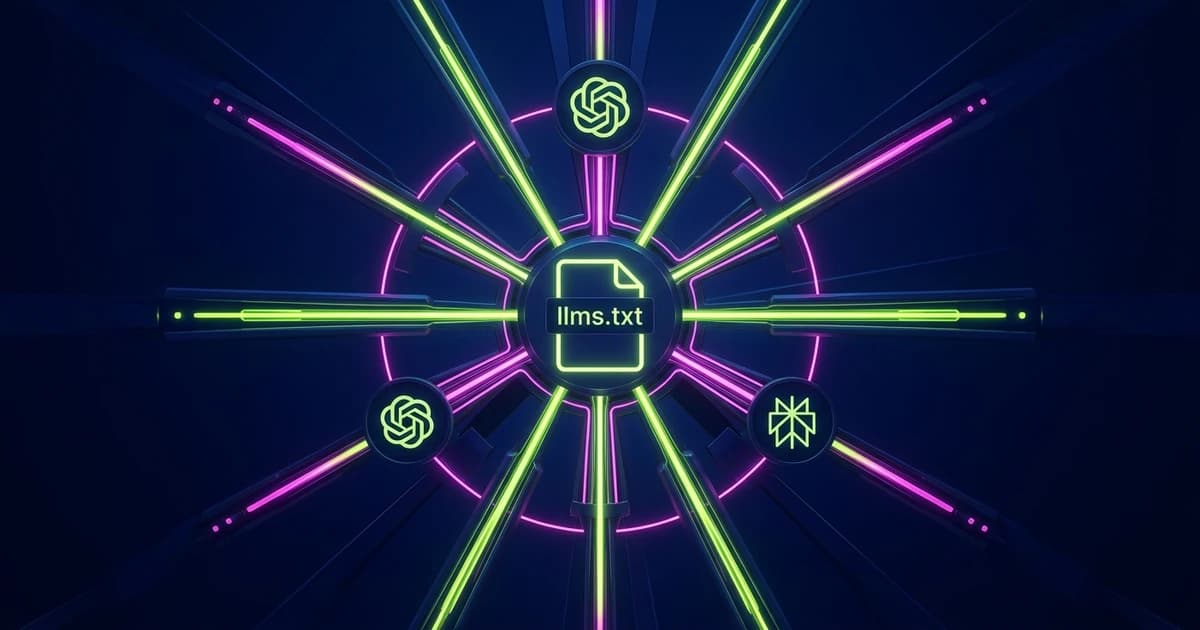
llms.txt is a plain-text file that tells AI assistants what your site is about and what to cite - and most sites don't have one yet.
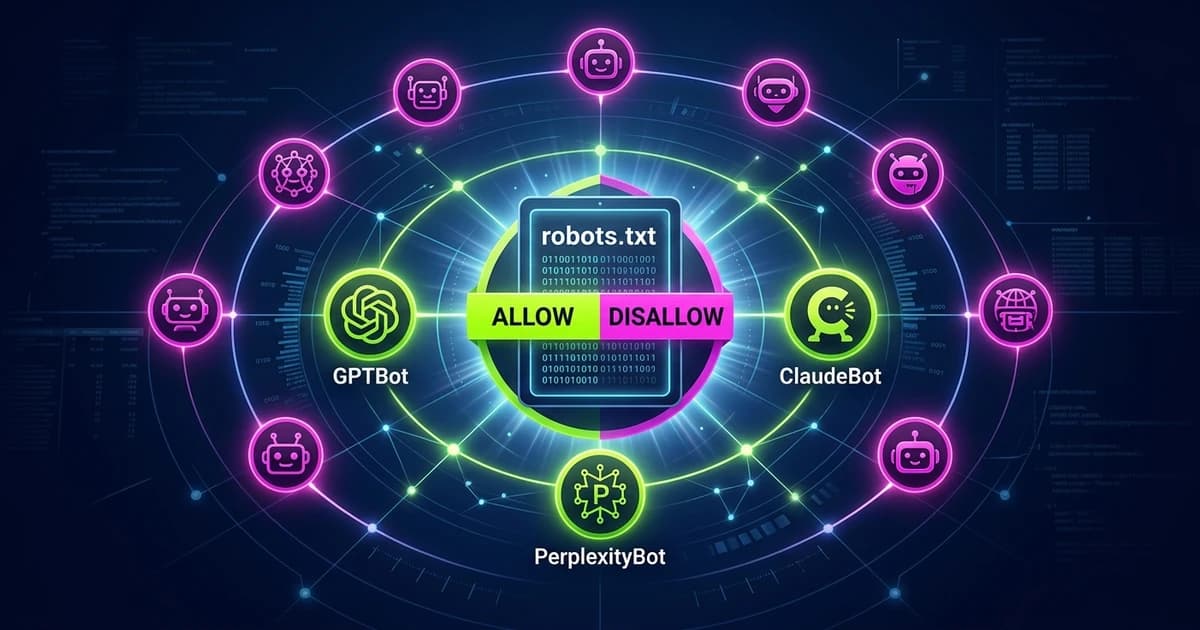
The definitive 2026 reference for robots.txt and AI crawlers - configure GPTBot, ClaudeBot, and PerplexityBot to maximize AI search visibility.

SoftwareApplication schema tells Google your product's price, rating, and category - unlocking rich results. Most SaaS sites get it wrong. Here's the exact markup that works.
Generative Engine Optimization (GEO) is the practice of structuring content so AI assistants like ChatGPT, Perplexity, and Claude cite it in their answers - not just rank it in Google.
Learn how to check if your site is visible to ChatGPT, Perplexity, and Claude with 6 actionable steps - from robots.txt to schema markup and direct AI testing.