
10 guides on AI Search Readiness — practical advice for improving your site's signals and AI search visibility.
ChatGPT Browse uses two separate bots — GPTBot for training and ChatGPT-User for real-time browsing. Here's how to optimise for both and get cited in live answers.


Google evaluates E-E-A-T through Quality Raters. AI assistants evaluate it through structured signals they can read. Here are the 8 signals that drive AI citation in 2026.

GEO and SEO share the same content foundation but target completely different algorithms. Here is exactly what changes when your audience is an AI, not a human searcher.
Most content is never cited by AI assistants — not because it's bad, but because it's structured for human scanning, not AI extraction. Here's the method that fixes it.

Perplexity AI prioritizes freshness, structured answers, and domain authority — not keyword density. Here are 9 tactics to get your site cited in its responses.

Run these 12 checks to find out whether AI assistants like ChatGPT, Perplexity, and Claude can access, understand, and cite your site.
llms.txt is a plain-text file that tells AI assistants what your site is about and what to cite — and most sites don't have one yet.
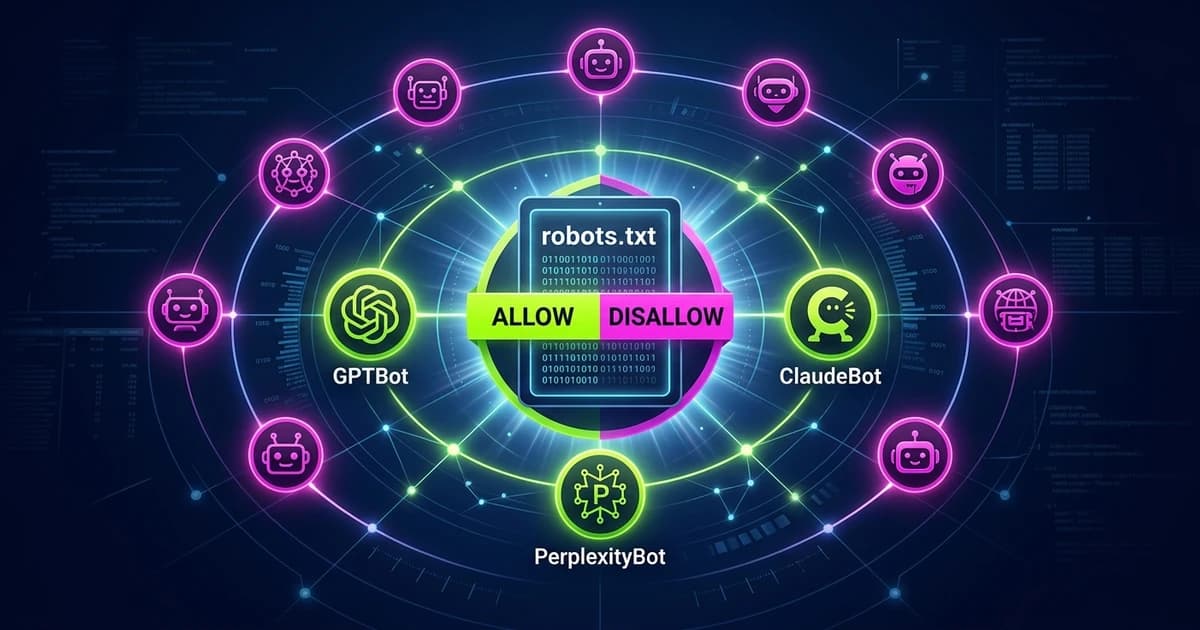
The definitive 2026 reference for robots.txt and AI crawlers — configure GPTBot, ClaudeBot, and PerplexityBot to maximize AI search visibility.
Generative Engine Optimization (GEO) is the practice of structuring content so AI assistants like ChatGPT, Perplexity, and Claude cite it in their answers — not just rank it in Google.
Learn how to check if your site is visible to ChatGPT, Perplexity, and Claude with 6 actionable steps — from robots.txt to schema markup and direct AI testing.