Organization schema tells Google and AI assistants who you are, not just what you do. Here are the fields that actually unlock Knowledge Graph and AI entity recognition in 2026.
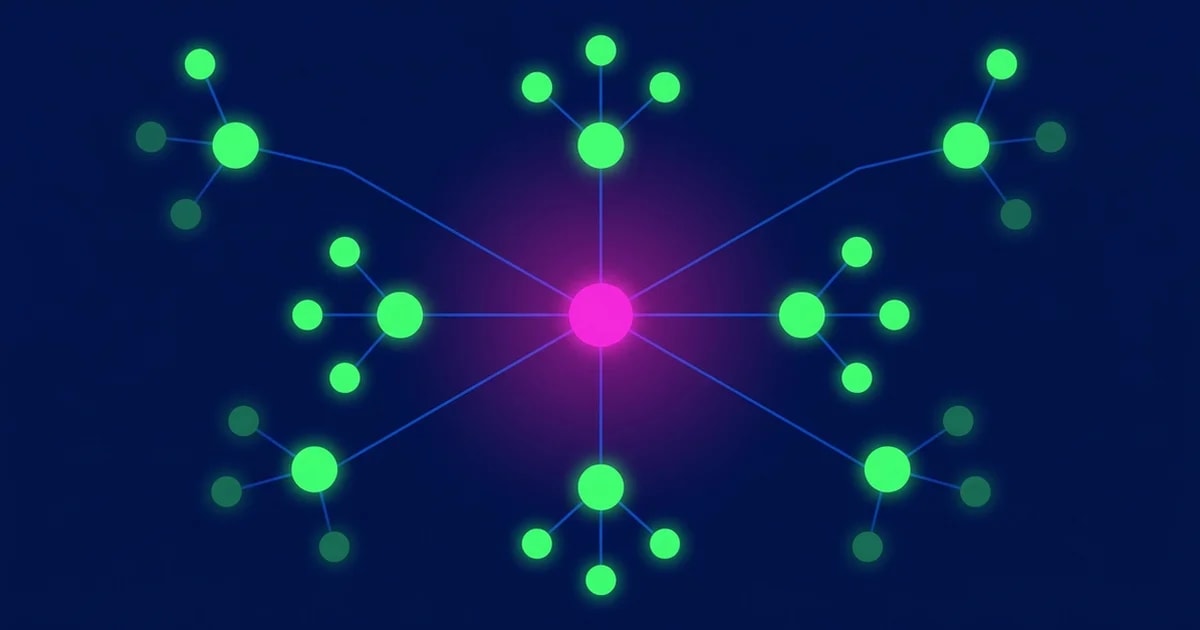
sameAs is the most important field in Organization schema. It connects your entity to verifiable external profiles — the mechanism by which Google and AI systems confirm your identity.sameAs links to Wikipedia, Wikidata, and authoritative directories. Without them, Google has no cross-reference to confirm the entity is the same one appearing in other sources."@type": ["Organization", "SoftwareApplication"] — to signal both the company entity and the product simultaneously.layout.tsx is the correct implementation. Duplicating it across pages creates conflicting signals.sameAs links to resolve entity identity when generating answers — making this a GEO signal, not just an SEO signal.Most sites that add Organization schema get it wrong in the same way: they fill in name, url, and logo, then stop. What they miss is the single field that does the most work — sameAs. Without it, the schema is a declaration that provides no independent verification. With it, the schema becomes a link in a web of cross-references that Google's Knowledge Graph and AI citation models use to confirm that the entity mentioned in one source is identical to the entity mentioned in another.
This guide covers the complete Organization schema implementation for a SaaS company in 2026: the fields that matter, the fields that are optional noise, the correct JSON-LD, and how to add it to a Next.js App Router application.
Organization schema communicates entity identity to machines. It is the answer to the question: "Who is this site, and where else can I verify that?"
For Google's Knowledge Graph: Google uses Organisation schema, combined with sameAs links, to build and maintain knowledge panel entries. When Google can cross-reference your site against Wikipedia, Wikidata, LinkedIn, and Crunchbase, it gains enough confidence to generate a knowledge panel for your brand. Without sameAs, Google can still index your site — it just cannot confirm your entity is distinct and verifiable.
For AI assistants: When ChatGPT, Claude, or Perplexity generates an answer that mentions an organisation, they resolve entity identity the same way Google does: by cross-referencing sources. An Organisation schema with a sameAs array that includes a Wikipedia article and a Wikidata entity ID gives the AI model direct disambiguation cues. "Yatna AI" in this source is the same entity as "Yatna" in that source because both sameAs arrays point to the same Wikidata ID.
For E-E-A-T: Google's quality evaluation framework rewards organisations that can be verified through multiple independent sources. Organisation schema with complete sameAs coverage is a structural signal of that verifiability — it is how you show, rather than tell, that your organisation is a real, cross-referenceable entity.
sameAs is an array of URLs, each pointing to a page that definitively identifies your organisation on an authoritative external platform. The logic is simple: if multiple independent, high-authority sources all say "this URL refers to the same entity as this organisation name", the confidence score for entity identity increases.
The minimum viable sameAs array for a SaaS company:
| Platform | Why It Matters |
|---|---|
| Wikipedia | The gold standard for entity disambiguation; most AI training datasets include Wikipedia heavily |
| Wikidata | Machine-readable entity database used directly by AI models and Google's Knowledge Graph |
| LinkedIn company page | Authoritative business directory; widely crawled and indexed |
| Crunchbase | Standard for SaaS/startup entity verification; included in many AI training datasets |
| Twitter/X company account | Large platform; cross-referencing confirms social identity |
| GitHub organisation | For developer tools and SaaS, GitHub org page is an authoritative identity signal |
| Official app stores | Google Play / App Store listing if applicable |
If your company does not have a Wikipedia article, the Wikidata entry is more achievable (you can create one if your organisation meets notability criteria) and provides significant benefit on its own. Wikidata is the underlying entity database that feeds many AI knowledge sources.
This is the full Organization schema for a typical SaaS company, covering all the fields that matter. Embed this as a <script type="application/ld+json"> block in your site root layout:
{
  "@context": "https://schema.org",
  "@type": ["Organization", "SoftwareApplication"],
  "name": "Yatna AI",
  "alternateName": "seo.yatna.ai",
  "url": "https://seo.yatna.ai",
  "logo": {
    "@type": "ImageObject",
    "url": "https://seo.yatna.ai/logo.png",
    "width": 512,
    "height": 512
  },
  "description": "Automated SEO and AI readiness audit tool for technical teams. Analyses 70+ SEO signals across E-E-A-T, Technical SEO, Schema, Core Web Vitals, and AI Search Readiness.",
  "foundingDate": "2025",
  "numberOfEmployees": {
    "@type": "QuantitativeValue",
    "minValue": 1,
    "maxValue": 10
  },
  "sameAs": [
    "https://www.wikidata.org/wiki/Q12345678",
    "https://www.linkedin.com/company/yatna-ai",
    "https://www.crunchbase.com/organization/yatna-ai",
    "https://twitter.com/yatna_ai",
    "https://github.com/yatna-ai"
  ],
  "contactPoint": {
    "@type": "ContactPoint",
    "contactType": "customer support",
    "email": "support@yatna.ai",
    "availableLanguage": "English"
  },
  "parentOrganization": {
    "@type": "Organization",
    "name": "Lowtouch AI",
    "url": "https://lowtouch.ai"
  },
  "applicationCategory": "BusinessApplication",
  "operatingSystem": "Web",
  "offers": {
    "@type": "Offer",
    "price": "0",
    "priceCurrency": "USD",
    "description": "Free SEO audit — no account required"
  }
}
Field-by-field notes:
@type: ["Organization", "SoftwareApplication"] — dual typing tells Google this entity is both a company and a software product. For SaaS, this is more accurate and more useful than either type alone.name — your official brand name. Match it exactly to how it appears on your Wikidata entry and LinkedIn page.alternateName — the domain name or any commonly used alternative. Helps AI models resolve "seo.yatna.ai" as referring to the same entity as "Yatna AI".logo — include width and height. Google uses these for knowledge panel display and favours explicit dimensions.description — write this as if it might be pulled directly by an AI assistant. One paragraph, specific, factual. Include what you do and who you do it for.foundingDate — ISO 8601 year (or full date). Establishes organisational provenance.numberOfEmployees — a QuantitativeValue range. Signals scale to AI models and directories.sameAs — as discussed above: the most important field. Use real URLs that resolve to pages about your specific organisation.contactPoint — required for some knowledge panel displays. At minimum include contactType and email or telephone.parentOrganization — if your SaaS is a product under a parent company, this cross-references the organisational hierarchy.applicationCategory and operatingSystem — from the SoftwareApplication type. Required for app-type rich results.offers — if you have a free tier, document it. It signals accessibility and is used by comparison AI assistants.Organisation schema is a site-level signal. It should appear once, in the root layout, not on every page. Repeating it on hundreds of pages creates redundant (and potentially conflicting) declarations.
In app/layout.tsx, add the JSON-LD script inside the <head> element. Use a static serialised JSON string (not user-supplied input) to inject the schema block safely:
const organizationSchema = {
  "@context": "https://schema.org",
  "@type": ["Organization", "SoftwareApplication"],
  "name": "Yatna AI",
  "url": "https://seo.yatna.ai",
  "logo": {
    "@type": "ImageObject",
    "url": "https://seo.yatna.ai/logo.png",
    "width": 512,
    "height": 512,
  },
  "description": "Automated SEO and AI readiness audit tool for technical teams.",
  "sameAs": [
    "https://www.wikidata.org/wiki/Q12345678",
    "https://www.linkedin.com/company/yatna-ai",
    "https://www.crunchbase.com/organization/yatna-ai",
    "https://twitter.com/yatna_ai",
    "https://github.com/yatna-ai",
  ],
  "applicationCategory": "BusinessApplication",
  "operatingSystem": "Web",
}
The schema object is static application data, not user-supplied input — making it safe to serialise as inline JSON for the <script> tag. Place the serialised block inside a <script type="application/ld+json"> element in the document <head>.
Why not use generateMetadata for schema: Next.js's generateMetadata API generates <meta> tags in <head>. JSON-LD schema requires a <script type="application/ld+json"> element, which generateMetadata does not produce. Schema must be added as a JSX element in the page or layout component.
Not every Schema.org property needs a value. These commonly appear in "comprehensive guides" but add minimal signal:
areaServed — relevant for local businesses; noise for a global SaaShasOfferCatalog — overly complex for most use cases; individual Offer objects are cleaneraward — only add if the award is real, recent, and the awarding organisation is recognisableknowsAbout — a free-text field with low machine-readability; skip itmemberOf — relevant for trade associations; not necessary for most SaaSThe principle: every field you add should be accurate and verifiable. Schema with inaccurate data is worse than missing schema — AI models cross-reference claims against other sources, and discrepancies reduce trust scores.
After deploying Organization schema, verify it in two places:
1. Google's Rich Results Test (search.google.com/test/rich-results): Paste your URL and check that the Organization entity is detected without errors. The test will flag missing required fields and invalid values.
2. Schema Markup Validator (validator.schema.org): More permissive than the Rich Results Test — it validates against the full Schema.org specification rather than Google's restricted subset. Useful for catching structural issues.
3. Manual AI check: Ask ChatGPT or Perplexity "What is [your company name]?" If your schema is effective and your sameAs links resolve, the AI should return an accurate description matching your description field. If it returns "I don't have information about this organisation" or describes a different company, your entity disambiguation needs more sameAs coverage.
Validate your schema markup now →
The shift to AI-mediated search has one critical consequence for organisation identity: AI models must resolve entity identity before they can attribute anything to your organisation. If an AI model cannot confirm that "Yatna AI" and "seo.yatna.ai" are the same entity — and that they are not the "Yatna" mentioned in an unrelated source — it will either not cite you or cite you with lower confidence.
Organisation schema with a well-populated sameAs array is the infrastructure that enables that resolution. Without it, even excellent content may be cited without attribution, or not cited at all.
This is distinct from the SEO use case (Knowledge Graph panels and rich results) but runs in parallel. The same schema serves both. The investment is not duplicated — it is multiplied.
Does my company need a Wikipedia article for Organization schema to work?
No, but it helps significantly for Knowledge Graph. Wikidata is more achievable for smaller organisations and provides substantial entity disambiguation benefit on its own. Include a Wikidata entry in your sameAs array and create one if it does not exist.
Should I put Organization schema on every page or just the homepage?
Just the root layout (which renders on every page). One declaration is sufficient and correct. Duplicating it on every page creates redundancy without additional benefit and can produce validation warnings.
What if I have multiple products under one organisation?
Create an Organization schema for the parent company in the root layout. Add SoftwareApplication schema for each product on its respective page or layout. Use the isPartOf property in each SoftwareApplication schema to reference the parent Organisation.
How long does it take for Organization schema to affect Knowledge Graph?
Google's Knowledge Graph update cycle is not publicly documented, but practitioners typically see knowledge panel changes within 4–12 weeks of adding accurate sameAs links. AI model training datasets update on different schedules — typically slower (months), but some systems like Perplexity use live web access and update much faster.
Validate your Organization schema and check 70+ other SEO signals — run a free audit at seo.yatna.ai →
About the Author

Ishan Sharma
Head of SEO & AI Search Strategy
Ishan Sharma is Head of SEO & AI Search Strategy at seo.yatna.ai. With over 10 years of technical SEO experience across SaaS, e-commerce, and media brands, he specialises in schema markup, Core Web Vitals, and the emerging discipline of Generative Engine Optimisation (GEO). Ishan has audited over 2,000 websites and writes extensively about how structured data and AI readiness signals determine which sites get cited by ChatGPT, Perplexity, and Claude. He is a contributor to Search Engine Journal and speaks regularly at BrightonSEO.